
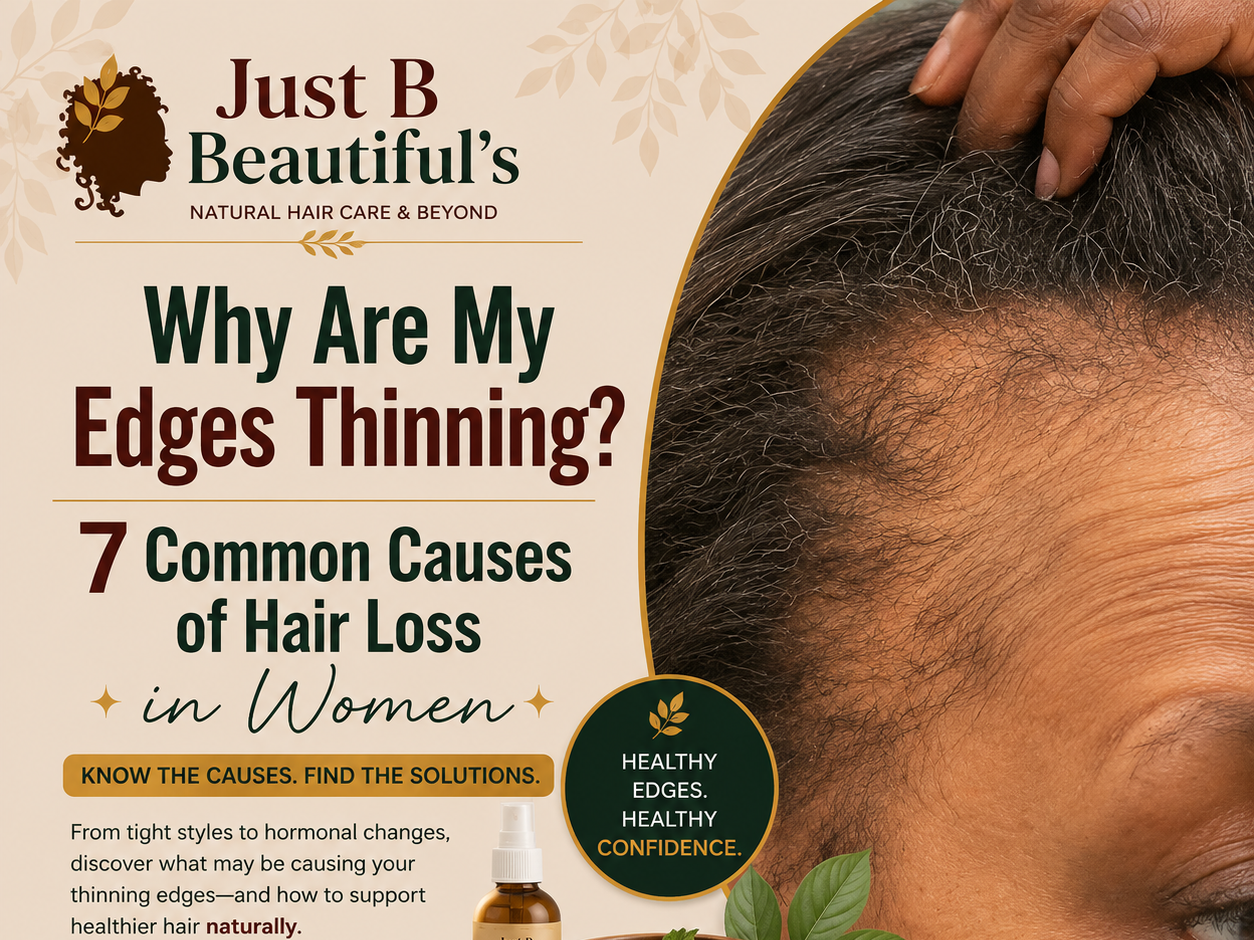
Why Are My Edges Thinning? 7 Common Causes of Hair Loss in Black Women
For many women, noticing thinning edges can be frustrating, emotional, and even alarming. Your edges often play a major role in framing your face and contributing to your overall hairstyle. When they begin to thin or disappear, it can impact your confidence and leave you wondering what went wrong.
The good news is that thinning edges are often treatable when the underlying cause is identified early. At Just B Beautiful Natural Hair Care & Beyond in St. Petersburg, Florida, we work with women throughout Pinellas County who are experiencing hair loss, thinning edges, scalp concerns, and damaged hair caused by a variety of factors.
Let's explore seven of the most common reasons your edges may be thinning and what you can do to support healthier hair growth.
1. Tight Protective Styles
Protective styles can be a wonderful way to maintain natural hair while reducing daily manipulation. However, styles that are installed too tightly can place excessive tension on the hairline.
Common culprits include:
Tight braids
Tight ponytails
Sew-ins
Loc styles pulled too tightly
Tight wigs or extensions
Over time, repeated tension can lead to traction alopecia, a form of hair loss caused by continuous pulling on the hair follicles.
What You Can Do
Choose styles that prioritize scalp comfort. If your scalp hurts after installation, the style is likely too tight. Allow your hairline time to recover between styles and communicate with your stylist about protecting your edges.
2. Stress and Emotional Changes
Stress affects more than your mental well-being. It can also affect your hair growth cycle.
Periods of emotional stress, illness, job changes, financial strain, grief, or major life transitions can trigger excessive shedding known as telogen effluvium.
When this happens, more hair follicles enter the resting phase and begin shedding at the same time.
What You Can Do
Managing stress through exercise, rest, hydration, and self-care can support overall wellness and healthier hair growth. Professional scalp treatments and consistent hair care routines may also help maintain scalp health during stressful periods.
3. Hormonal Changes
Hormones play a significant role in hair growth. Changes related to:
Pregnancy
Postpartum recovery
Perimenopause
Menopause
Thyroid conditions
Polycystic Ovary Syndrome (PCOS)
can all contribute to thinning edges and overall hair loss.
When hormone levels fluctuate, hair follicles may shrink or produce weaker strands, resulting in gradual thinning around the hairline.
What You Can Do
If you suspect hormonal changes are contributing to hair loss, consult your healthcare provider while also maintaining a healthy scalp and hair care routine.
4. Poor Scalp Health
Healthy hair starts with a healthy scalp.
Product buildup, dryness, inflammation, clogged follicles, and poor circulation can all interfere with the hair growth process.
Signs of scalp issues may include:
Itching
Flaking
Excessive dryness
Tenderness
Irritation
What You Can Do
Regular cleansing, scalp treatments, and moisturizing products can help create a healthier environment for hair growth.
Many of our clients enjoy incorporating our Rose Water Spray into their routine to help hydrate the scalp and refresh their hair between appointments.
5. Nutritional Deficiencies
Your body requires essential vitamins and minerals to support healthy hair growth.
Low levels of nutrients such as:
Iron
Vitamin D
Zinc
Protein
Biotin
can contribute to hair thinning and slower growth.
Hair is often one of the first places where nutritional deficiencies become visible.
What You Can Do
Focus on a balanced diet rich in whole foods, lean proteins, healthy fats, fruits, and vegetables. Staying hydrated also plays an important role in maintaining healthy hair and scalp function.
6. Improper Hair Care Practices
Frequent heat styling, harsh chemicals, over-processing, and rough handling can weaken the hairline over time.
Many women unknowingly damage their edges through:
Excessive brushing
Tight edge control products
Frequent flat ironing
Relaxers
Chemical treatments
What You Can Do
Gentle hair care practices make a significant difference. Reducing heat exposure, minimizing harsh chemicals, and using moisturizing products can help support stronger, healthier hair.
Professional natural hair care services can also help identify damaging habits and recommend healthier alternatives.
7. Aging and Genetics
Sometimes thinning edges are influenced by factors outside of our control.
Genetics can affect hair density, growth patterns, and susceptibility to hair loss. Aging naturally impacts the hair growth cycle as well, often resulting in finer strands and slower growth.
While genetics may contribute to hair loss, maintaining a healthy scalp and hair care routine can still help maximize the health of your existing hair.
What You Can Do
Early intervention is key. The sooner thinning is addressed, the more options are available to support healthier hair and scalp conditions.
How Professional Hair Loss Services Can Help
If you've noticed thinning edges, don't ignore the signs.
At Just B Beautiful Natural Hair Care & Beyond, we help clients throughout St. Petersburg and Pinellas County identify potential causes of hair loss while developing personalized strategies to support healthier hair growth.
Our services may include:
Hair loss consultations
Scalp assessments
Natural hair care services
Shampoo and conditioning treatments
Loc maintenance
Sisterlocks services
Scalp hydration treatments
Healthy hair education
Every client's hair journey is unique, which is why personalized care is so important.
Support Your Healthy Hair Journey
Thinning edges can be caused by many different factors, including stress, hormonal changes, tight styling practices, scalp health issues, nutritional deficiencies, and genetics.
Understanding the cause is the first step toward creating a plan that supports stronger, healthier hair.
If you're concerned about thinning edges or hair loss, our team is here to help. Schedule an appointment with Just B Beautiful Natural Hair Care & Beyond and let us help you create a healthy hair care routine designed specifically for your needs.
Healthy hair starts with knowledge, consistency, and professional care.